 Chain Alpha Trends
 Account Abstraction Guide: Stunning, Effortless ERC-4337
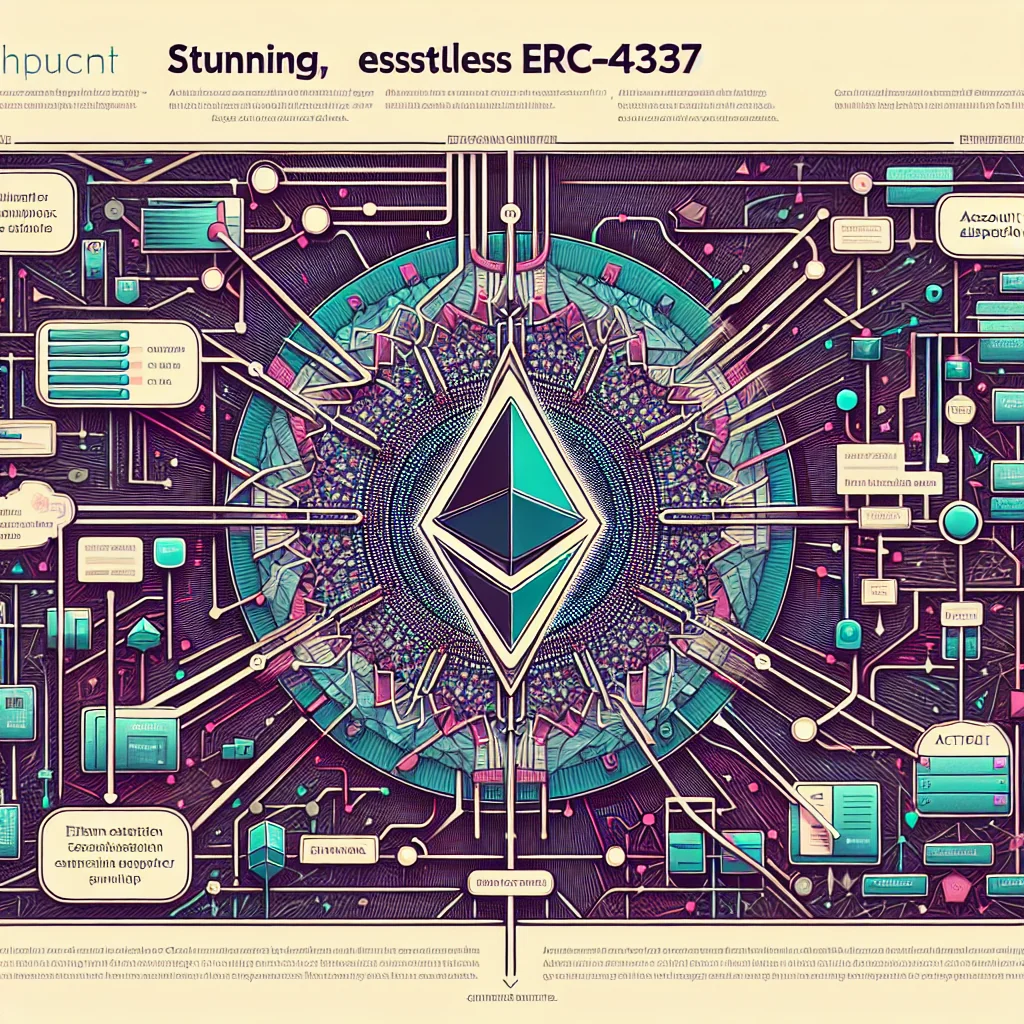
Account abstraction changes how people use Ethereum. Instead of wrestling with seed phrases, gas, and clunky wallets, users can get smart, flexible accounts that feel closer to normal apps. ERC-4337 is the standard that makes this shift real.
This guide breaks ERC-4337 into clear, practical pieces. By the end, smart accounts will feel much less mysterious and a lot more useful.
What Is Account Abstraction?
Account abstraction means moving Ethereum account logic from fixed rules in the protocol into smart contracts. In simple words, your account becomes a smart contract that can run custom rules for authentication, security, and transactions.
Instead of using a single private key that signs every transaction, a smart account can define its own rules. It might use multiple keys, a hardware device, a passkey from your phone, or a social recovery flow with trusted friends.
Why ERC-4337 Exists
Ethereum started with two types of accounts: externally owned accounts (EOAs) and contract accounts. EOAs are controlled by a private key. Contract accounts are controlled by code. EOAs hold most user funds, even though contract accounts can do much more.
Developers wanted smart accounts years ago, but changing the core protocol is slow and risky. ERC-4337 solves this by using smart contracts and a separate transaction flow, without a hard fork. It builds a parallel system that simulates account abstraction on top of Ethereum as it stands.
How ERC-4337 Works in Plain Language
ERC-4337 introduces a new concept called a UserOperation. Instead of sending a transaction directly to the chain, a user sends a UserOperation to a special network of nodes called Bundlers.
The flow looks like this in practice.
Core Components of ERC-4337
To understand ERC-4337, it helps to know the four main pieces that work together.
- Smart account (account contract) – a contract that holds funds and defines how to validate and execute operations.
- UserOperation – a structured request that describes what the user wants the smart account to do.
- Bundler – a node that collects many UserOperations, wraps them in a transaction, and sends them to the chain.
- EntryPoint contract – a shared contract that receives batches of UserOperations and routes them to the right smart accounts.
Each UserOperation is like a “transaction intent”. The smart account, not the EOA, defines how to check the signature, how to pay gas, and what to execute. This unlocks huge flexibility while keeping a shared, audited EntryPoint for safety.
Step-by-Step ERC-4337 Flow
The process from user action to execution has a few clear steps. Once you see them, ERC-4337 feels less abstract and more like a pipeline.
- The user signs a UserOperation with whatever scheme the smart account expects.
- The UserOperation is sent to a Bundler through a JSON-RPC endpoint.
- The Bundler simulates the UserOperation via the EntryPoint to check validity and gas.
- Valid UserOperations are grouped into a batch and sent as one transaction to the EntryPoint.
- The EntryPoint calls each target smart account, which then validates and executes its logic.
From the user’s perspective, this can feel as simple as tapping a button in a wallet. Under the hood, though, their account logic remains fully programmable.
Smart Accounts vs Traditional EOAs
Smart accounts change the mental model of “my wallet is just a key”. Instead, the wallet app becomes a client for a contract account with its own rules.
| Feature | EOA (Traditional Wallet) | Smart Account (ERC-4337) |
|---|---|---|
| Control | Single private key | Custom logic in contract |
| Security | Lose key = lose funds | Social recovery, multi-sig, rules |
| Gas payment | User pays in ETH only | Paymaster can sponsor or accept tokens |
| Upgrades | Static behavior | Upgradable patterns possible |
| User experience | Manual gas, raw addresses | Batch actions, automation, friendlier flows |
For a new user, the biggest shift is that their account can feel forgiving. Instead of a single point of failure, they can rely on layers of logic that match how people actually lose devices or forget passwords.
Real Benefits of ERC-4337 in Daily Use
Account abstraction often sounds technical, but its benefits show in tiny moments. Think about a user opening a game on a phone and signing in with a passkey, not a seed phrase. Their account still lives on-chain, but the flow matches their normal habits.
Gasless and Sponsored Transactions
With ERC-4337, a smart contract called a Paymaster can pay gas on behalf of the user. The user signs the action, the Paymaster covers the fee, and may later charge a token fee off-chain or in a different asset.
This makes “gasless onboarding” possible. A DeFi app can let a first-time user swap tokens without holding ETH, then charge a small fee in the token being swapped. The user feels less friction and faces fewer concepts at once.
Social Recovery and Safer Access
Smart accounts allow social recovery, where a group of trusted addresses or devices can approve a new key if the old one is lost. Instead of a seed phrase on a piece of paper, a user chooses three friends who must each approve a recovery request.
This spreads risk across people and devices and fits how people already protect important access in daily life, like shared bank signatories or corporate approvals.
Batching and Automation
Smart accounts can bundle multiple actions into one operation. A user may approve a token, deposit in a protocol, and stake in a rewards contract through a single click in their wallet interface.
Developers can go further and script recurring payments, spending limits, or time-locked actions, all inside the account logic instead of relying on external bots alone.
Basic Architecture of an ERC-4337 Smart Account
An ERC-4337 smart account usually follows a simple pattern that separates validation from execution. This keeps the design clear and easier to audit.
At a high level, most accounts include:
- validateUserOp – checks signatures and rules for each UserOperation.
- execute – runs the actual call after validation passes.
- nonce management – stops replays and keeps order.
- upgrade or owner logic – allows controlled changes over time.
A simple example is a “single owner” smart account that acts like an EOA but lives as a contract. From there, teams can add layers such as multi-owner setups, session keys, or device-based limits.
How Developers Can Get Started With ERC-4337
Developers do not need to build every piece from scratch. The ERC-4337 ecosystem already ships SDKs, reference contracts, and Bundler services that shorten setup time.
Practical Steps for Integration
A clear path helps teams move from curiosity to a working prototype. The steps below give a clean sequence.
- Choose a smart account implementation (for example, a popular open-source account library).
- Set up access to an ERC-4337 Bundler endpoint on your target network.
- Integrate an ERC-4337-compatible wallet SDK into your frontend or app.
- Use testnets to send UserOperations, inspect failures, and test gas flows.
- Add Paymaster support if you want gas sponsorship or token-based fees.
- Run audits and security reviews before mainnet deployment.
During testing, it helps to log raw UserOperations and EntryPoint events. This gives insight into validation failures, gas estimates, and corner cases that may affect real users.
Common Challenges and How to Handle Them
ERC-4337 changes assumptions that many tools and dApps still rely on. Some friction points appear often and have known patterns to reduce risk.
Tooling and Compatibility
Many existing dApps expect EOAs. They assume a signer object that calls eth_sendTransaction directly. ERC-4337 shifts this by introducing eth_sendUserOperation and smart account addresses.
To keep things smooth, developers can add ERC-4337 as a layer on top of existing flows. For instance, a wallet may still expose a signer-like interface but internally build UserOperations instead of raw transactions.
Gas Costs and Optimization
Smart accounts add contract logic, which means extra gas. For simple transfers, they can be slightly more expensive than EOAs. The real gain comes with batch actions, fewer failed transactions, and fewer support tickets from lost keys.
Teams can reduce overhead by keeping validation logic lean, caching heavy checks where safe, and using efficient storage layouts. Profiling on testnets gives clear data on worst-case costs.
Security and Upgradability
Upgradable smart accounts feel attractive but add risk. A malicious upgrade can drain user funds or lock accounts. Strong upgrade controls, multi-sig ownership, and clear upgrade policies matter a lot here.
A safe pattern is to ship a versioned smart account with a time delay for upgrades. Users can see an upgrade coming and move funds if they lose trust.
Who Should Care About ERC-4337 Right Now?
Account abstraction supports many user groups, but a few stand out today.
- Consumer apps that want email or passkey login instead of seed phrases.
- DeFi platforms that want smoother onboarding and gasless first actions.
- Game studios that need on-chain assets without scaring off casual players.
- Enterprises that require policy-based accounts and clear approval flows.
In each case, ERC-4337 helps bridge the gap between strict blockchain rules and human behavior. It turns wallets into programmable accounts that reflect how people already think about access, sharing, and recovery.
Future Outlook for Account Abstraction
ERC-4337 is the most visible step for account abstraction today, but not the only one. Protocol-level proposals may arrive later, and other chains experiment with native smart accounts already.
Even so, ERC-4337 sets a shared language and tooling layer for smart accounts. As more wallets, Bundlers, and Paymasters mature, users may stop asking “EOA or smart account?” and simply expect safer, smoother accounts everywhere.
Key Takeaways
Account abstraction with ERC-4337 makes Ethereum accounts programmable, safer, and easier to use. Smart accounts move logic into contracts, enable gas sponsorship, social recovery, and batching, and open space for creative designs that match real user behavior.
For developers, the path is clear: pick an account implementation, wire up a Bundler, test on a network, and shape an experience that hides the rough edges while keeping the guarantees of the chain. For users, the payoff is simple: fewer seed phrases, fewer scary errors, and accounts that feel made for humans, not just for keys.